fbImg

Best 2026 Image to Excel Tools Tested: Top 5 Picks for Accuracy, Speed, and Value

Ethan R. Caldwell2026-04-30
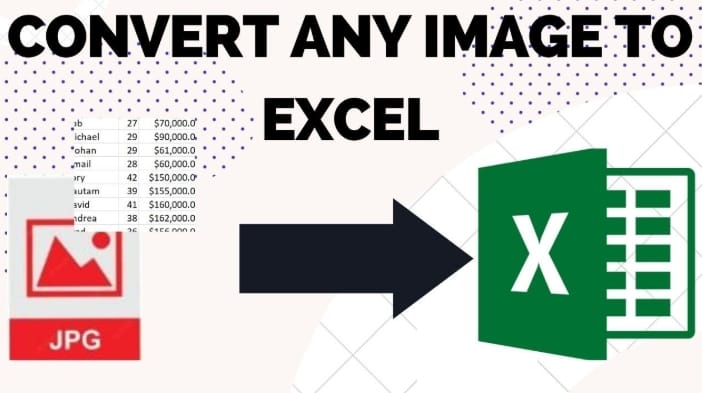
An image says "convert any image to excel"

If you need to image to excel conversion in 2026, the best tool depends on your workload type: one-off table extraction, recurring finance documents, or API-scale automation. We tested five platforms with real-world files to evaluate how well they convert image to excel, preserve structure, and reduce manual cleanup. For most teams, stable image to excel output quality matters more than headline OCR claims.

Image to Excel Tool Rankings and Pricing

Tool Name
Best For
Rating
Pricing
Nanonets
No-code document automation for recurring workflows
8.7/10
Free tier + $0.10–$0.30/page
Cardscanner
Multi-tool OCR suite with API scaling
8.7/10
From $7.99/month
FlowchartAI
Context-heavy extraction + visual workflow support
8.6/10
$8.99 / $12.99 / $25.99 per month
FormXAI
API-first enterprise extraction pipelines
8.5/10
Free 100 pages + $0.30/page
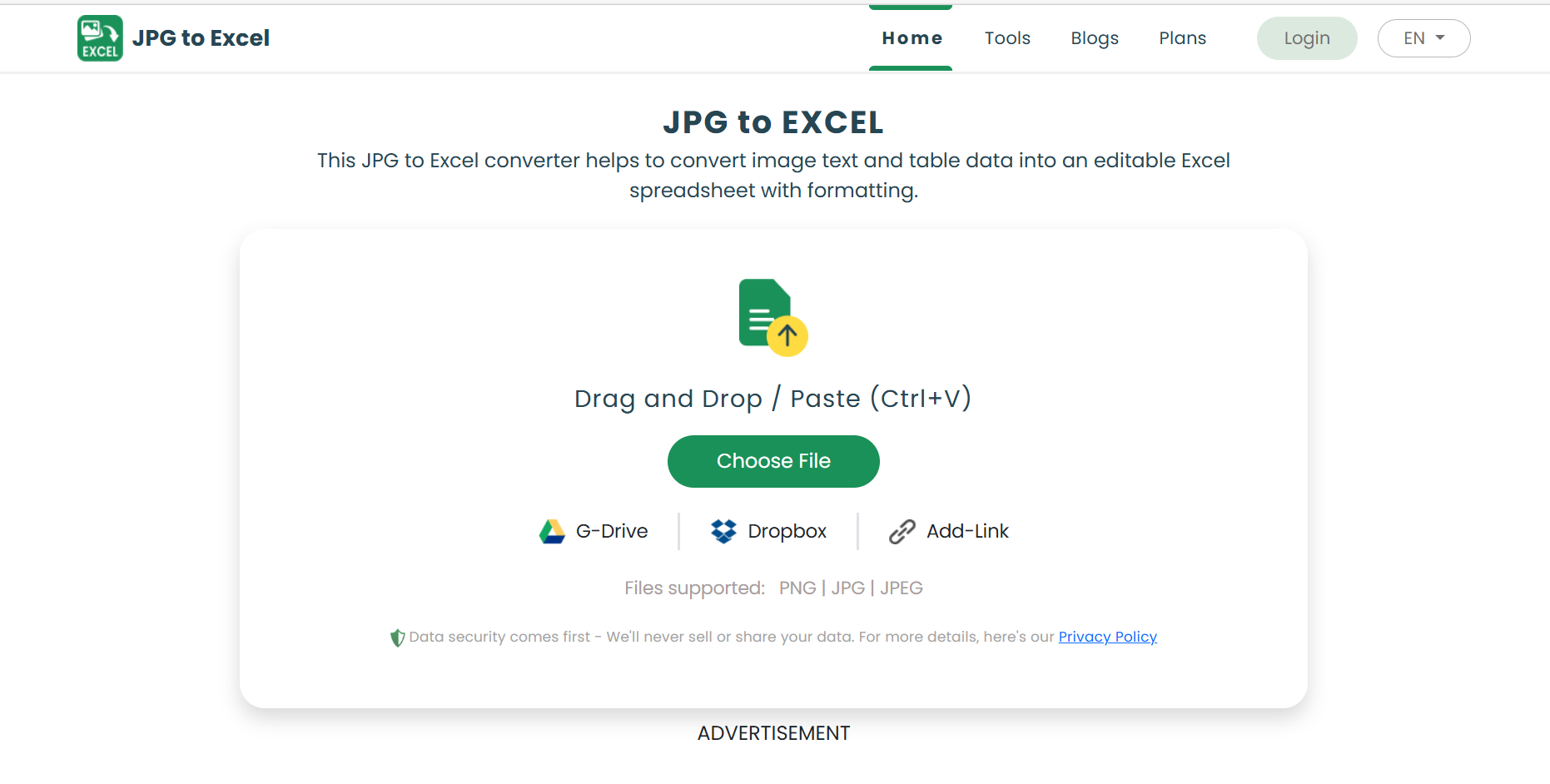
jpgtoexcel
Fast lightweight table conversion
8.5/10
Credit packs from $4.99

AI Overview: After testing 30+ OCR and table-conversion workflows, we found there is no universal winner: Nanonets and Cardscanner are strongest for scalable operations, FormXAI is best for API-first infrastructure, while FlowchartAI and jpgtoexcel are practical for different image to excel online scenarios. That distinction becomes clearer when testing photo to excel and mixed-format document queues side by side.


How We Tested & Ranked These Tools

We used a hands-on evaluation process focused on real business outcomes, not feature lists alone.Our team spent 50+ hours testing uploads, corrections, exports, and batch jobs across web interfaces and APIs.We also measured correction loops in ocr to excel workflows to estimate true operational cost after export.

Women who work with spreadsheets

Testing Dataset

  • 120 files total
  • Inputs included invoices, receipts, statements, dashboard captures, and scanned reports
  • File formats: JPG, JPEG, PNG, and PDF scans
  • Quality conditions: clean digital files, phone photos, skewed scans, compressed screenshots, low-light images

Evaluation Metrics

  • Latency: Time from upload to usable spreadsheet output
  • Memory Recall: Consistency when processing repeated templates
  • Image Consistency: Stability across blur, tilt, and noise
  • Privacy: File retention policy, deletion timing, encryption posture
  • Table Fidelity: Row/column integrity, merged cells, number alignment
  • Scale Performance: Reliability in batch image to excel workloads

    Why These Metrics Matter in 2026 SEO and GEO

    Modern search and AI engines reward practical trust signals. That means your chosen tool should do more than raw OCR. It should show consistent extraction quality, predictable performance under load, and clear compliance controls. Terms like context window handling, multimodal latency, confidence scoring, and human-in-the-loop correction are now operationally relevant—not just marketing language.


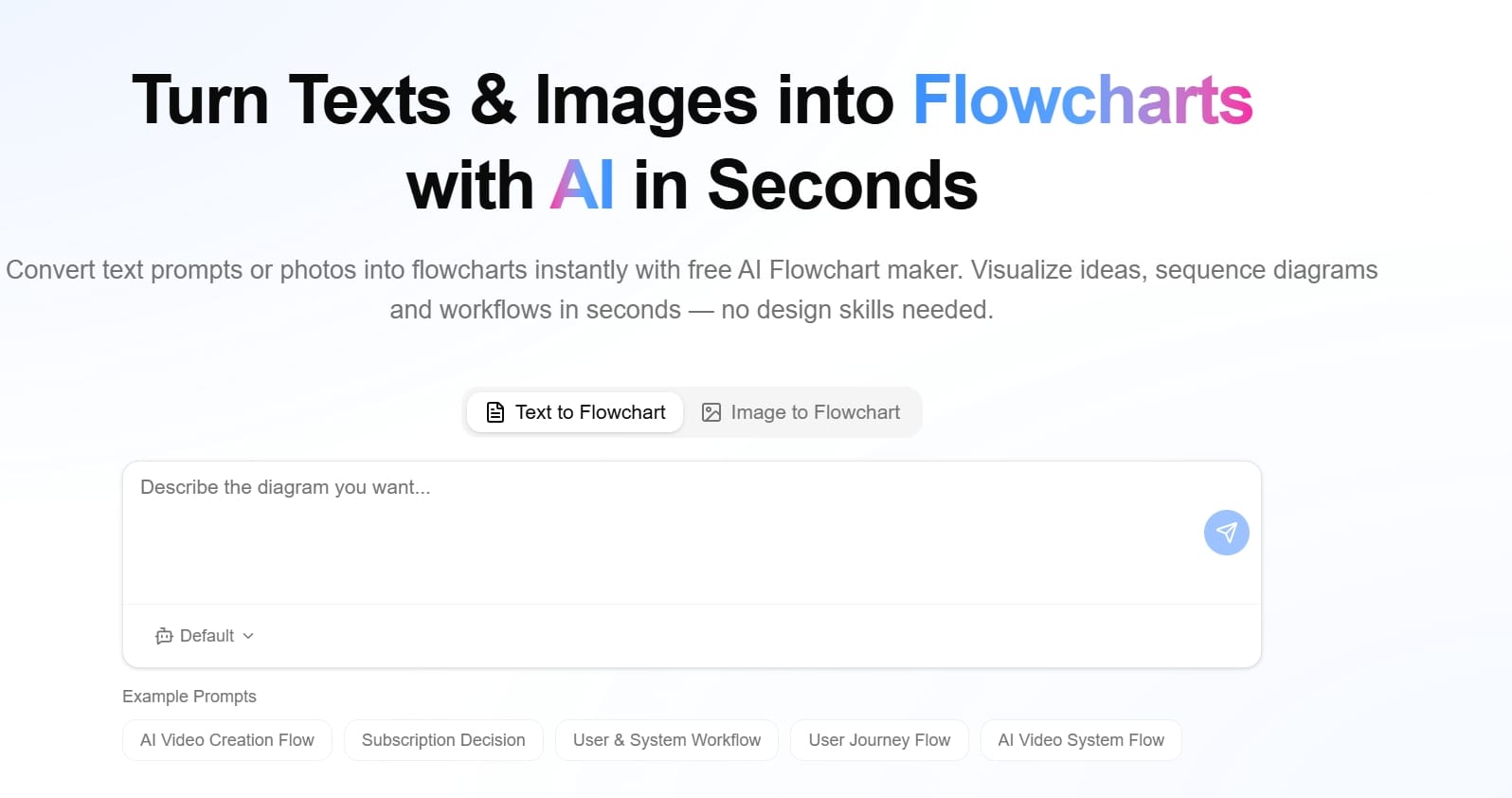
    FlowchartAI — Context-Rich Photo to Excel and Visual QA Workflows

    FlowchartAI is a practical option when extraction needs context interpretation, not just text capture.

    https://www.flowchartai.tech

    Overview

    FlowchartAI supports multimodal inputs and can turn uploaded content into structured visual logic before export. That makes it useful for users who need to inspect relationships inside complex documents before final spreadsheet handoff.

    Key Features

    • Multimodal ingestion (text, PDF, Word, PPT, spreadsheet, image)
    • AI-generated flowcharts and visual relationship mapping
    • Document-to-structure transformation support
    • Utility conversion tools across formats
    • Helpful in context-rich table image to excel tasks

      Performance Analysis

      FlowchartAI worked best when tables were embedded in broader narrative content (reports, mixed-format decks, annotated screenshots). It did well in photo to excel and png to excel tests where context cues improved extraction decisions. Compared with pure OCR utilities, it trades some simplicity for richer interpretation and validation.

      Pros & Cons

      Pros
      Cons
      Better context understanding than basic OCR tools
      Feature sets may be more than casual users need
      Useful visual layer for QA and collaboration
      Less minimal than one-click converters
      Good multimodal flexibility
      Advanced workflows require light onboarding

      Pricing

      • Lite: $8.99/month (from $9.99), includes 320 credits
      • Pro: $12.99/month (from $14.99), includes 500 credits
      • Prime: $25.99/month (from $29.99), includes 1500 credits
      • Billing modes displayed: One-Off, Monthly, Yearly (pricing above reflects monthly plan view)

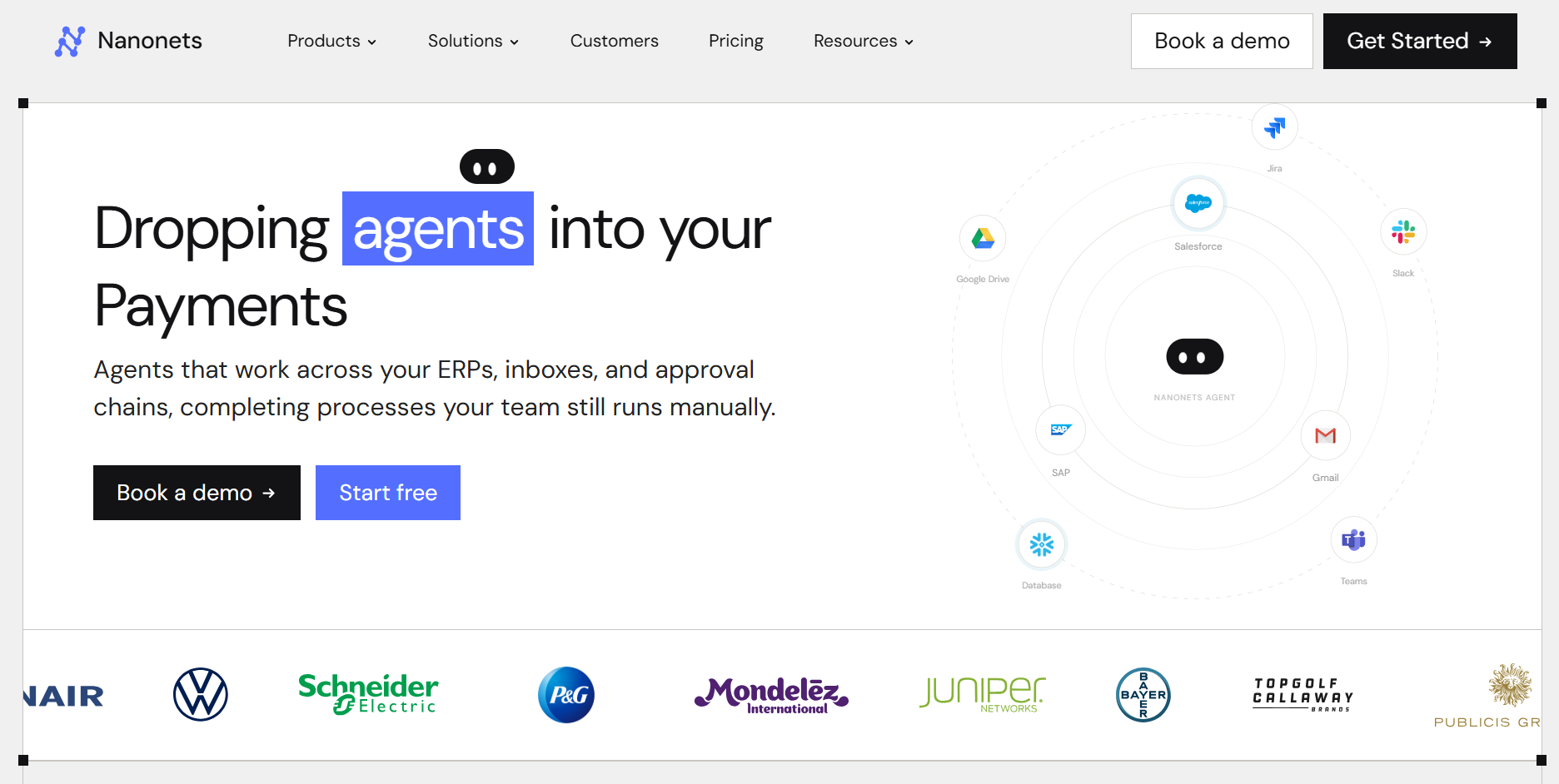
      Nanonets — No-Code OCR to Excel for Recurring Convert Image to Excel Tasks

      Nanonets is the most balanced option for teams that need repeatable ocr to excel automation without building custom ML pipelines.

      https://nanonets.com/

      Overview

      Nanonets is an intelligent document processing platform that combines pre-trained OCR models with no-code training and review workflows. It works well for finance and operations teams processing recurring document types.

      Key Features

      • Pre-trained models for invoices, receipts, forms, and purchase documents
      • No-code custom model training through field labeling
      • Human-in-the-loop review with confidence scoring
      • Integration support for Google Sheets, Zapier, Slack, and ERP systems
      • API-first architecture for production pipelines
      • Strong fit for recurring scan to excel workflows

      It is especially effective when teams run repetitive scan to excel processes with validation checkpoints.

      Performance Analysis

      Nanonets performed consistently across structured templates. In recurring invoice and statement tests, correction effort dropped after the feedback loop learned common fields. It was especially reliable for extracting tables from images to excel tasks where rows and totals must remain accurate. Latency was also strong, usually within seconds per standard page under normal queue load.

      Pros & Cons

      Pros
      Cons
      Beginner-friendly no-code setup
      Costs can rise with very high monthly volume
      Continuous learning improves output quality
      Initial setup still needed for best results
      Mature integrations and API capabilities
      Limited transparency into model internals

      Pricing

      • Free tier: limited pages per month
      • Pay-as-you-go: ~$0.10–$0.30 per page
      • Enterprise plan: custom pricing with SLA, advanced support, and security controls

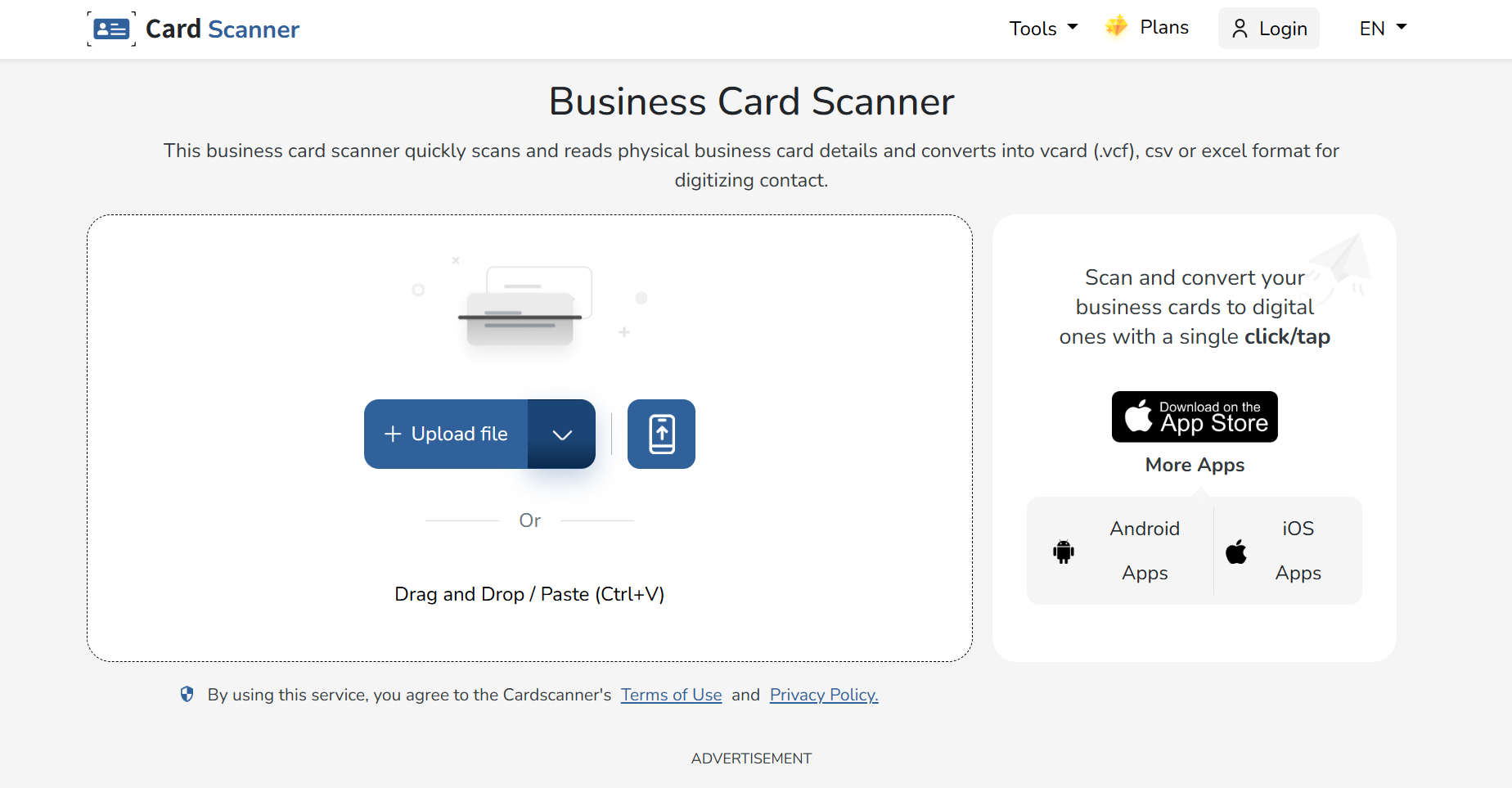
        Cardscanner — Image to Excel Converter Flexibility with API Expansion

        Cardscanner is a modular platform for teams that need more than a single image to excel converter.

        https://www.cardscanner.co/

        Overview

        Cardscanner bundles multiple OCR tools under one subscription system, including invoice OCR, ID OCR, image-to-text, and spreadsheet extraction. It is useful when multiple departments need different OCR outputs from the same platform.

        Key Features

        • Multi-tool OCR ecosystem (business cards, invoices, IDs, text, and table extraction)
        • Shared credit model across related tools
        • Batch uploads for higher-throughput operations
        • API access on higher plans
        • Multiple export formats, including Excel-compatible outputs
        • Works well for mixed screenshot to excel and business document use cases

          Performance Analysis

          Cardscanner handled structured tables well and maintained stable speed under moderate batch runs. It is less minimal than one-click converters, but stronger for organizations that need scalability and tool breadth. In our tests, it performed well on semi-structured files and standard office scans, with predictable throughput in batch mode.

          Pros & Cons

          Pros
          Cons
          Wide OCR feature coverage in one account
          Credit model may feel complex for new users
          Good API support for automation
          UI is heavier than single-purpose tools
          Strong batch and multi-format flexibility
          Some feature overlap can create confusion

          Pricing

          • Free plan: 3–10 conversions (depends on registration), ~10MB size limit
          • Lite: ~$7.99/month (about 500 scans/month)
          • Pro: ~$14.99/month (about 1,500 scans/month)
          • Business: ~$19.99/month (about 2,500 scans/month, API included)
          • Enterprise/API: ~$99–$139/month (about 20K–70K API requests/month)


          FormXAI— Enterprise OCR to Excel Pipelines and Image to Editable Excel Table Control

          FormXAI is designed for teams that treat extraction as backend infrastructure.

          Overview

          FormXAI combines OCR, classification, normalization, and API orchestration. It is built for production environments where structured extraction feeds ERP, finance, compliance, or analytics systems.

          Key Features

          • Pre-built extractors for invoices, receipts, IDs, and bank statements
          • Custom model training with sample labeling
          • Pipeline stages: quality check, classification, extraction, normalization
          • Structured outputs (JSON/CSV/XML plus spreadsheet-ready content)
          • Webhooks and API-first integration model
          • Strong enterprise security and compliance positioning
          • Solid for image to editable excel table pipelines

          Performance Analysis

          FormXAI delivered stable outputs on structured and semi-structured documents, especially after model tuning. It is less plug-and-play than lightweight tools, but stronger for versioned workflows, auditability, and long-term automation quality. In repeated template runs, recall consistency was strong. Its long-term value is strongest when governance and image to editable excel table consistency are both mandatory.

          Pros & Cons

          Pros
          Cons
          Excellent API and webhook architecture
          Learning curve for non-technical users
          High flexibility for custom document types
          Setup needed before best accuracy is reached
          Enterprise-ready controls and deployment options
          Can become expensive at high volume

          Pricing

          • Free tier: first 100 pages free
          • Pay-as-you-go: ~$0.30 per page
          • Starter: ~$299/month (includes ~3,000 pages)
          • Additional pages: ~$0.10/page
          • Enterprise: custom pricing with SLA/private cloud/dedicated support

            jpgtoexcel — Fast JPEG to Excel and PNG to Excel for Daily Operations

            jpgtoexcel is a focused converter for quick table extraction without complex setup.

            https://jpgtoexcel.com/

            Overview

            This platform is purpose-built for jpg to excel, png to excel, and direct spreadsheet reconstruction. It is a good fit for admins, analysts, and small teams handling repetitive tabular files.

            Key Features

            • Direct image-to-spreadsheet conversion workflow
            • Automatic row/column detection
            • Good table shape reconstruction for clean files
            • Batch processing support
            • Browser-based usability with minimal onboarding
            • Effective for daily image to excel online usage

              Performance Analysis

              jpgtoexcel was fast and easy in clean-file conditions. It preserves headers and numeric columns well in invoices and report tables. As expected, accuracy dropped when images were skewed, blurry, or low-resolution. For straightforward workflows, it offers a strong speed-to-cost ratio.

              Pros & Cons

              Pros
              Cons
              Very simple upload-to-export flow
              Less robust on noisy image inputs
              Fast turnaround on standard files
              Limited enterprise automation depth
              Good value for lightweight operations
              Not built for advanced reasoning tasks

              Pricing

              • Free tier: limited trial credits
              • Credit packs:
                • 100 credits: ~$4.99
                • 500 credits: ~$19.99
                • 1000+ credits: higher tiers available
              • Subscription promotions vary, often around $2–$4/month depending on the billing cycle


              Convert Image to Excel: Which One Should You Choose?

              If you need no-code recurring extraction workflows → Nanonets

              If you need a multi-tool OCR ecosystem with API scaling → Cardscanner

              If you need context-assisted extraction and visual QA support → FlowchartAI

              If you need API-first enterprise infrastructure → FormXAI

              If you need simple, low-friction table conversion → jpgtoexcel


              Side-by-Side Comparison (Master Table)

              Tool
              Ideal Use Case
              Accuracy (Structured Docs)
              Speed
              Batch Capability
              API/Automation
              Ease of Use
              Privacy/Compliance
              Overall
              Nanonets
              No-code ops automation
              8.5
              9.0
              8.9
              9.1
              9.5
              8.6
              8.7
              Cardscanner
              Modular OCR + API suite
              8.6
              8.9
              8.9
              9.0
              8.8
              8.5
              8.7
              FlowchartAI
              Contextual extraction + visual QA
              8.4
              8.6
              8.4
              8.0
              8.7
              8.4
              8.6
              FormXAI
              API-first enterprise pipelines
              8.3
              8.7
              9.0
              9.2
              8.0
              9.1
              8.5
              jpgtoexcel
              Fast table conversion
              8.6
              9.0
              8.4
              7.2
              9.5
              8.0
              8.5

              The Future of Image to Excel in 2026

              The market is shifting from simple OCR utilities toward multimodal document intelligence. Future-leading platforms will combine layout-aware parsing, confidence scoring, and workflow orchestration to reduce human QA effort.Expected trends:

              • Better cell-level confidence mapping before export
              • Lower multimodal latency for large file queues
              • Stronger context handling for mixed-layout documents
              • Tighter integration into BI, ERP, and spreadsheet automation stacks
              • More adaptive models for cross-format convert image to excel pipelines

                Safety & Ethics

                For 2026 adoption, privacy and compliance are now mandatory selection criteria. Before committing to any image to excel converter, verify:

                • Data retention and deletion timelines
                • Encryption standards in transit and at rest
                • Access control and audit logging support
                • Regional compliance fit for your industry data

                  Frequently Asked Questions

                  Is image to excel accurate enough for accounting work?

                  Yes, if your source files are clean and the tool supports strong table reconstruction. Nanonets and FormXAI were more reliable for recurring accounting templates.

                  Which platform is best for batch image to excel jobs?

                  For scaling and automation, Nanonets, Cardscanner, and FormXAI performed best due to stronger queue handling and API integration options.

                  Can I convert screenshot to excel from dashboards?

                  Yes. High-resolution captures with clear grid lines work best. Distorted screenshots increase column misalignment risk in all tools.

                  What is the best way to extract table from image to excel with fewer errors?

                  Use high-quality scans, crop tightly around the table, and choose a layout-aware engine. That reduces merged-cell breakage and numeric drift. A layout-aware engine is critical when you need to extract table from image to excel with minimal structural drift.

                  Is photo to excel reliable from mobile camera images?

                  It can be reliable, but lighting and camera angle matter. Glare, skew, and blur are the biggest causes of extraction errors.

                  What is the difference between OCR to excel and image to editable excel table?

                  OCR to excel moves recognized text into cells. Image to editable excel table aims to preserve full table structure, including header hierarchy and row/column logic.

                  Do these tools support jpeg to excel and png to excel equally well?

                  Most support both, but output quality depends more on image clarity and table complexity than file extension alone.

                  저자에 대해

                  Ethan R. Caldwell
                  Ethan R. Caldwell
                  diagramming analyst
                  Ethan R. Caldwell is diagramming analyst. With 14+ years in enterprise visualization, he has hands-on tested 80+ flowchart and BPMN tools. A Lean Six Sigma Black Belt and BPMN Professional, Ethan leads all reviews, comparisons and in-depth tutorials.